
The Power of Co-Regulation: Why Your Calm Can Calm Others
How our nervous systems communicate safety and how we can use presence, breath, and attunement to help others regulate.
I recently shared a story about a client who called me in crisis. After we hung up, I took five minutes to feel my emotions before moving into my next meeting—a practice I’ve been cultivating as part of metabolizing trauma.
What I didn’t share is that I’m fortunate my wife and I both work from home. When that call ended, I stepped away from my office, walked into the room where she was working, and asked for a hug. She gave me an extra-long one—the kind where you exhale twice and your shoulders finally drop.
In the book Burnout by Emily and Amelia Nagoski, they talk about “completing the stress cycle,” and one of their examples is the 20-second “awkwardly long hug.” Not the polite, quick squeeze, but the one that lingers long enough for your nervous system to get the message: You’re safe now.
Research shows that a 20-second hug can trigger the release of oxytocin, lower cortisol, and slow your heart rate and breathing—physically moving your body out of fight-or-flight and into rest-and-digest mode.
There’s a reason for this. Hugs are a form of co-regulation—our nervous systems syncing up through touch, presence, and rhythm. In other words, a hug is more than comfort—it’s a physiological intervention.
And while hugs are one beautiful way to co-regulate, they’re not the only way. In our work and our relationships, there are countless moments where our presence, breath, and body language can help someone else’s nervous system find its way back to calm.
What is Co-Regulation?
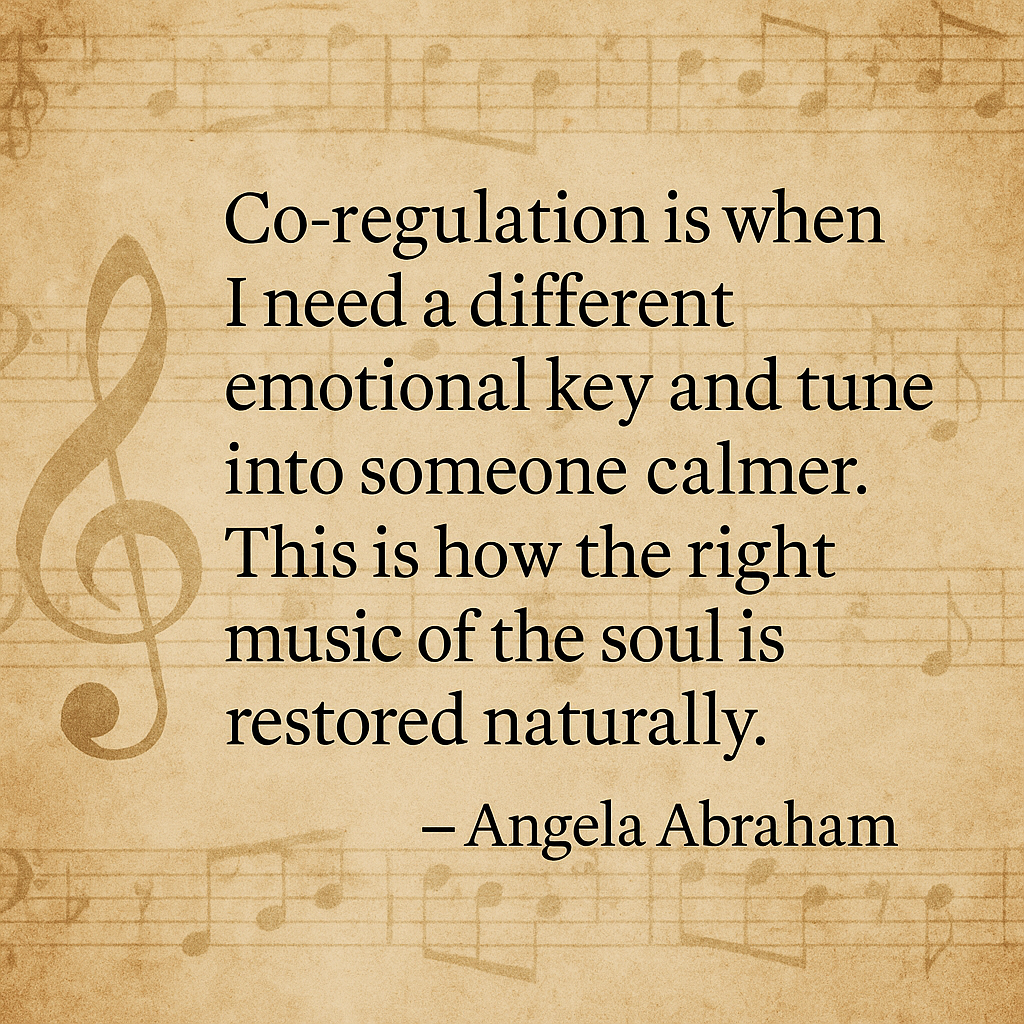
Co-regulation is the process of two nervous systems connecting so that one person’s regulated state helps the other person return to regulation. It’s how infants learn to self-soothe—through a parent’s steady heartbeat, gentle tone, and calm presence. And it’s how we, as adults, often recover from stress faster when someone else is grounded with us.
In trauma-informed work, co-regulation is not just kindness—it’s a skill. When a client is triggered or a colleague is in the middle of an emotional storm, your ability to stay calm isn’t just “being professional.” It’s a way of lending your stability to help them find theirs.
How to Practice Co-Regulation
Here are a few ways to intentionally bring co-regulation into your work and relationships:
1. Anchor yourself first
Before you try to calm someone else, take a slow, deep breath into your belly and exhale longer than you inhale. Feel your feet on the ground. Relax your shoulders. Remind yourself: Their feelings are not my feelings. I can be steady here.
2. Use your body language
Keep an open posture. Relax your facial muscles. Make steady but soft eye contact. Your body is constantly signaling safety—or danger—to others.
3. Match, then lead
If someone is escalated, meet them just enough that they feel understood—then begin to slow your own speech, soften your tone, and ease your gestures. You’re inviting them to join you in calm.
4. Offer grounding cues
If appropriate, ask present-focused questions (“What’s one thing you can see right now?”) or invite a small sensory shift (stepping outside, sipping water, holding something comforting).
5. Physical touch—in the right context
In our personal lives, consensual touch can be a powerful co-regulation tool. A hug, holding hands, or even sitting close can help our nervous systems sync and signal safety. In professional settings, touch is generally not appropriate—but the principle still applies. You can offer safety through your presence, tone, and body language, without ever making physical contact.
Why This Matters
We live in a culture that tells us to “self-regulate” as if we’re meant to do it all alone. But we are wired for connection. Self-regulation often begins as co-regulation—especially when we are stressed, grieving, or in crisis.
In our professional roles, this means that how we show up matters as much as what we say. In our personal lives, it’s a reminder that offering calm presence isn’t “fixing” someone—it’s giving them a nervous system to lean on until theirs can steady again.
This week, try noticing the moments when someone else’s calm shifts how you feel—or when your calm changes the energy in the room. Then, practice it on purpose. You may be surprised at how much your steady presence can help someone find their way back to safety.
P.S. If you haven’t read my post on metabolizing trauma, you can find it here. Together, these practices—metabolizing our own stress and co-regulating with others—are essential for the work we do and the lives we lead.
